













Australia, New Zealand & Pacific Islands
Copyright © 2016 Toshiba Corporation. All Rights Reserved.

 As schools balance digital learning with the continued importance of printed materials, many are looking more closely at the hidden cost and waste associated with printing. For Norwest Christian College in Sydney’s northwest, a rethink of its print environment led to a 35% reduction in per-page print costs, less paper waste and a simpler experience for teachers.
Norwest Christian College, situated in Riverstone in Sydney’s northwest, educates students from the Early Learning years through to Year 12, under its ‘Building Purposeful Lives’ framework. The school has grown steadily since its inception 40 years ago and now provides a learning environment for 1300 students, and employs 220 staff.
Why print still matters in a digital classroom
As a modern school that embraces technology, students utilise a mix of screen-based and paper-based activities. Teachers understand the value of students literally putting pen to paper, requiring printed teaching materials and worksheets – and as volumes grew, so did costs.
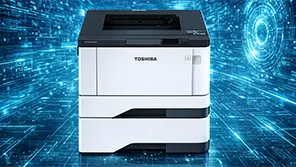
The school has a fleet of Toshiba multifunction devices they use to print, scan and copy paper documents. Mervyn Moodley, ICT Manager, realised there was an opportunity to reduce both print costs and paper waste through better use of the school’s existing print technology.
Finding a smarter way to manage printing
When the College reviewed its ageing print fleet, it explored newer devices integrated with PaperCut print management software.
‘We had considered PaperCut a number of years earlier’, he says, ‘but at that time we had around half the students we have now, and we didn’t really need it. As the College has grown and our print volumes increased, particularly colour printing, we realised that our print costs and waste had increased faster than our student numbers.’
The new devices were installed over the summer break in January 2024, along with the PaperCut print management platform. The new devices were faster, but the real savings came from the ‘Follow Me’ feature.
Reducing waste without making life harder for teachers
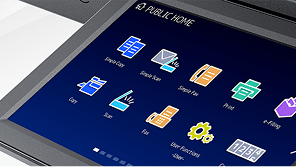
With Follow Me, teachers simply send their document to a central print queue, instead of a specific physical printer. The job is held in the queue until the teacher gets to a device and authenticates themself to ‘release’ the print job. Because jobs are only printed when released at the device, unnecessary printing is reduced — saving paper, toner and power. If a teacher changes their mind, the document simply remains in the queue and is never printed.
Print volumes down, savings up
‘The difference was noticeable immediately’, says Mervyn. ‘Print volumes went down significantly.’
Now that they have had the devices for over 12 months, Mervyn has been able to do a full year on year comparison assessment. ‘Our estimated savings on the per-page print cost is 35%’, he says. ‘That is a really significant saving. On top of that, we have the saving on the physical paper, which adds to the overall total. There is a higher lease cost, but even taking that into consideration we have made really valuable savings for the College – that’s real money that we can spend on other things for the College and our students.’
As well as the savings, teachers love the new system: ‘They don’t have to think about which printer to use, they simply walk up to the nearest or least busy one, authenticate and release their job. It makes their lives easier’ says Mervyn.
The College is not only impressed with the technology, but with the quality and speed of service. ‘We’ve always found that Toshiba technicians respond quickly. In an environment that prints as much as we do, things do occasionally go wrong. When a school needs support, they need it fast, and we’ve found Toshiba very responsive.’
Lessons for other schools
Like Norwest Christian College, many schools have a heavy print/copy/scan workload, and they often underestimate the hidden waste in their current setup.
With a greater focus than ever on sustainability, print management is an important part of reducing a school’s environmental footprint, and as Norwest found, even seemingly small workflow changes can create significant operational savings.
Schools are also increasingly conscious of protecting sensitive information, from student wellbeing records and learning support documentation through to staff reports and administrative material. Secure release printing helps reduce the risk of confidential documents being left unattended on printers, while also giving teachers and staff greater flexibility about where they collect their printing.
For many schools, print management is now about more than reducing costs — it is also becoming an important part of operational efficiency, sustainability and information security.